
How to study for multiple choice exams
Multiple choice tests reward recognition, which makes them easy to overestimate: everything looks familiar when the answer is right in front of you. The fix is practicing retrieval under realistic conditions. This method works for any exam and takes three rounds.

 Coming soon
The three-round method
Round 1: learn by chapter
Do practice questions chapter by chapter and read the explanation straight after each. The goal is coverage, not a high score.
Round 2: clear what you know
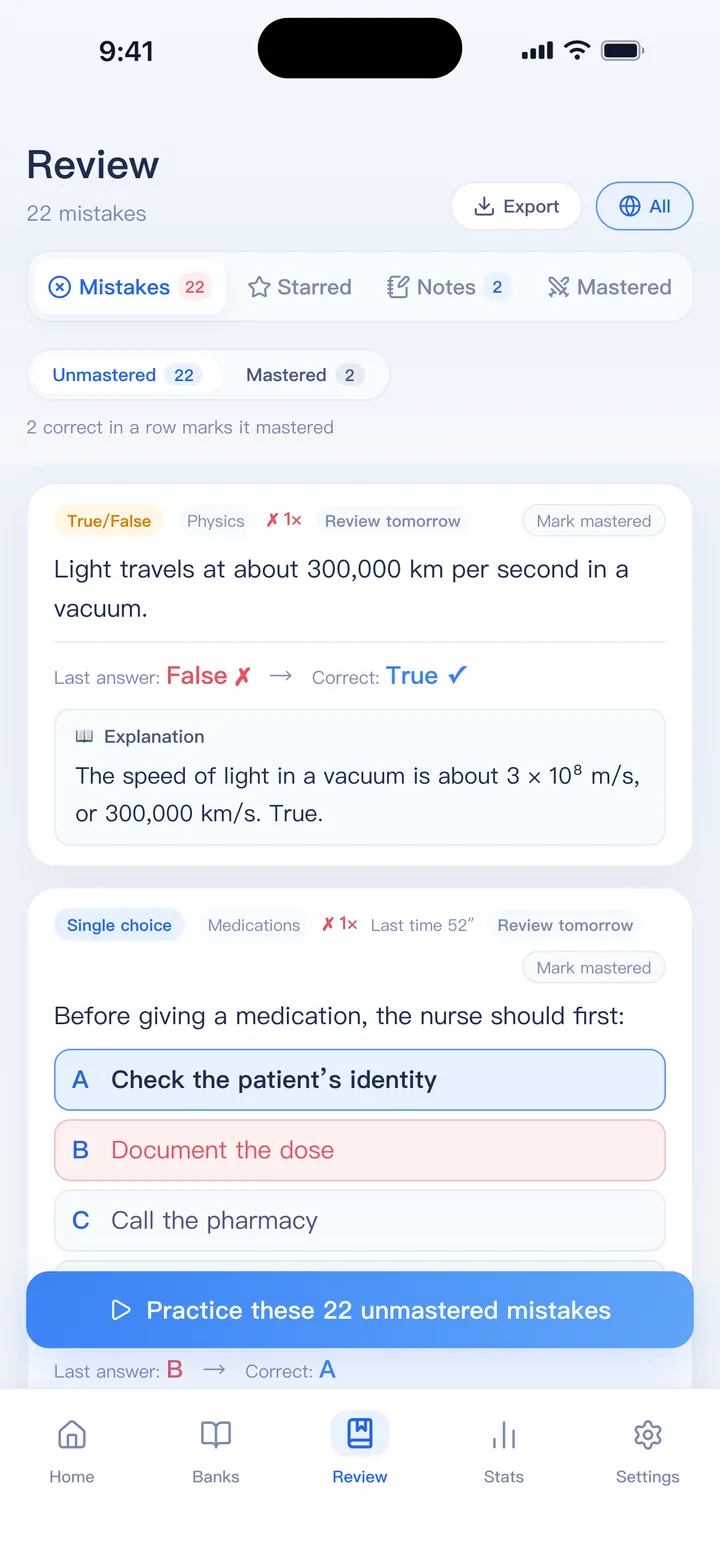
Keep repeating until each question is right twice in a row, then drop it. The pile shrinks to what you actually don't know.
Round 3: timed mock exams
Sit full papers at real length with no peeking. Review which topics cost points and which questions took too long.
Every day: clear mistakes first
Start each session with questions you got wrong, spaced so they return just as you're about to forget.
Habits that make the biggest difference
- Shuffle questions and options, or you end up memorizing positions rather than content
- Work one question set until you've mastered it instead of skimming three
- Ask why each wrong option is wrong, not just why the right one is right
- Label each mistake: didn't know it, mixed it up, or careless. Each needs a different fix
- Time yourself early, because running out of time costs more points than people expect
- In the last few days, stop starting new papers and review your mistakes instead
On test day: read the question before the options, eliminate what you can, answer the easy ones first, flag the hard ones and come back. Change an answer only when you have a reason.
FAQ
How many practice questions should I do?
Fewer than you think, done properly. A question you've answered, understood and re-tested is worth more than ten you've skimmed.
Should I save past papers for the end?
Keep one or two recent ones for a final mock exam, and use the rest throughout. They're your best guide to how questions are asked.
What if I keep recognizing questions I've seen?
Shuffle the options, and explain the answer in your own words before you check. If you can't explain it, you don't know it yet.
How can an app help?
It handles the admin: scoring, collecting mistakes, spacing reviews and tracking accuracy by chapter. Import your questions and the method runs itself.
Bring your questions. Start practicing today.
Free to download for iPhone, iPad and Android.
Coming soon